Informational

Vastu for Home: Complete Vastu Shastra Guide & Tips

vastu for home
Vastu Shastra for Home

In India, a home is not just a physical structure- it carries emotional, spiritual, and financial significance. For many years, people have turned to Vastu Shastra, an ancient Indian system of architecture, to help design homes that foster happiness, wealth, health, and success. Even today, when looking for a new place to live—whether it’s an apartment, villa, or house—many buyers wonder: Does Vastu really make a difference?

This guide breaks down everything you need to know about Vastu for your home. We’ll cover the basic ideas behind it, the importance of different directions, and practical tips for modern living spaces. Whether you’re building, buying, or renovating your home, this blog will help you make choices that align with Vastu principles.

Understanding Vastu Shastra for Home

Understanding Vastu Shastra for Home

Vastu Shastra is a traditional Indian architectural concept that focuses on harmonizing a building with the five fundamental elements: Earth, Water, Fire, Air, and Space. The primary aim of Vastu Shastra is to align natural energies within a space, promoting a sense of harmony and well-being for its inhabitants.

When effectively implemented, Vastu Shastra can lead to several benefits, including:

  • Improved mental tranquility and physical health
  • Enhanced financial stability
  • Strengthened family relationships

A home that adheres to Vastu principles is thoughtfully designed, taking into account factors such as orientation, spatial layout, and energy circulation. This careful planning contributes to a balanced and positive living environment.

Why Is Vastu Important for a New Home?

Why Is Vastu Important for a New Home?

Vastu is especially important when planning or buying a new home because structural changes are easier at this stage.

Key Reasons Vastu Matters:

  • Energy balance: A vastu-aligned home allows positive cosmic energy to flow freely.
  • Health benefits: Proper placement of rooms reduces stress and illness.
  • Financial growth: Many believe correct vastu supports career and business success.
  • Long-term peace: A vastu-compliant home reduces conflicts and instability.

This is why many real estate consultants recommend checking house direction according to vastu before finalizing a property.

Vastu Shastra for Home Direction
Understanding the Implications of Non-Vastu Compliant Homes

Understanding the Implications of Non-Vastu Compliant Homes

Houses that do not adhere to Vastu Shastra principles may not necessarily bring bad luck; however, an ongoing imbalance can lead to various issues.

Potential Effects of Non-Compliance:
  • Increased frequency of arguments or misunderstandings among residents
  • Financial instability or delays in achieving financial goals
  • Health-related concerns, such as anxiety or sleeping disorders
  • A general lack of mental peace and well-being

The positive aspect is that many of these Vastu concerns can be addressed through simple remedies, allowing for improvements without the need for major renovations or demolitions.

Vastu House Plan: Building a Positive Home Environment

Vastu House Plan: Building a Positive Home Environment

A vastu house plan emphasizes the strategic placement of rooms in alignment with cardinal directions to foster a harmonious living space.

Optimal Room Placement Guidelines:
  • Living Room: Ideally located in the North or East to enhance positive energy and promote social interactions.
  • Kitchen: Best situated in the South-East corner, also known as the Agni corner, to align with the element of fire and encourage good health.
  • Master Bedroom: Recommended for the South-West area to provide stability and comfort for the homeowners.
  • Children’s Bedroom: Ideally placed in the West or North-West to support growth and development.
  • Pooja Room: Preferably located in the North-East to enhance spiritual energy and peace.
  • Bathrooms: Should be in the West or North-West to maintain hygiene without disrupting energy flow in the home.

A thoughtfully designed layout not only adheres to vastu principles but also contributes to a favorable long-term living experience.

Vastu Shastra Principles for House Design

Vastu Shastra Principles for House Design

Vastu Shastra outlines essential guidelines for home design that can enhance the living experience and promote positive energy. Here are some fundamental Vastu tips to consider when planning your house:

1
Plot Shape: It is advisable to choose a square or rectangular plot shape, which is believed to foster balance and harmony.
2
Open Spaces: Maximizing open spaces in the North and East directions allows for better airflow and sunlight, contributing to a vibrant environment.
3
Placement of Heavy Structures: Heavier constructions should ideally be situated in the South and West areas of the plot. This arrangement is thought to provide stability and strength to the home.
4
Ventilation and Sunlight: Proper airflow and adequate sunlight are crucial for maintaining a healthy living space. Ensure that your house design incorporates these elements effectively.
5
Balance of Elements: The correct positioning of water and fire elements within the home is vital. This includes placing water features in auspicious locations and being mindful of fire-related installations.

By adhering to these Vastu principles, you can create a home that not only feels welcoming but also aligns with the ancient wisdom of Vastu Shastra, regardless of the house’s size or geographical location.

The Importance of Eight Directions in Vastu Shastra

The Importance of Eight Directions in Vastu Shastra

In Vastu Shastra, each direction, known as Vastu Disha, is associated with specific energies that can influence various aspects of life. Understanding these directional significances is essential when choosing a flat or plot for your home. Here is a breakdown of each direction and its corresponding energy:

  • North (Ruled by Kubera): Associated with wealth and career opportunities, the energy from this direction can enhance financial prosperity.
  • South (Ruled by Yama): This direction represents stability, providing a grounding influence that can foster a sense of security.
  • East (Ruled by Indra): Known for promoting growth and health, the energy in the eastern direction can contribute to physical and personal development.
  • West (Ruled by Varuna): This direction signifies gains, helping to attract prosperity and beneficial opportunities.
  • North-East (Ruled by Ishan): Associated with spiritual energy, the north-east direction is ideal for meditation and personal reflection.
  • South-East (Ruled by Agni): Linked to fire and the kitchen, this direction plays a vital role in promoting nutrition and vitality in living spaces.
  • South-West (Ruled by Nairutya): This direction embodies strength and empowerment, supporting personal and familial stability.
  • North-West (Ruled by Vayu): Symbolizing movement and change, the north-west direction encourages adaptability and dynamic growth.

Incorporating the principles of Vastu Disha while selecting a home can significantly impact your living experience and overall wellbeing.
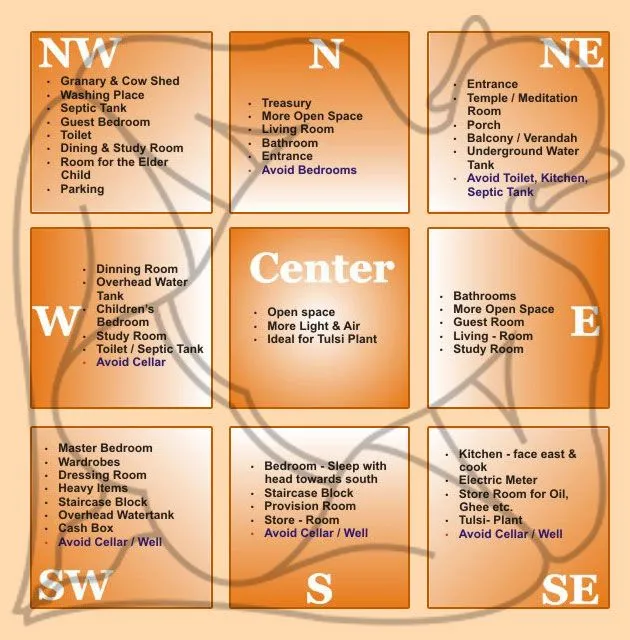
Eight Directions in Vastu Shastra
Auspicious Directions as per Vastu Shastra

Auspicious Directions as per Vastu Shastra

Structural Positions North South East West North East North West South East South West
Kitchen Avoid! Best
Staircase Avoid! Best
Toilet Avoid! Best
Boring / Underground Tank Best Avoid!
Temple Best
Over Head Tank Best
Master Bedroom Best
Kids Room
Guest Room Best
Living Room Best
Understanding the Best Corner of a Flat According to Vastu

Understanding the Best Corner of a Flat According to Vastu

In Vastu Shastra, the North-East corner, known as Ishan Kon, is regarded as the most sacred and powerful area of a flat.

Optimal Uses for This Corner:
  • Designating a Pooja room
  • Creating a meditation area
  • Establishing a living space

To maintain positive energy, it is advisable to avoid locating kitchens or toilets in this corner.

The Significance of the Main Door Direction in Vastu

The Significance of the Main Door Direction in Vastu

The main door of a home acts as an energy gateway, influencing the overall ambiance of the space.

Preferred Directions for the Main Door: North East North-East

For properties that are under construction, ensuring the correct direction of the main door from the outset is essential for long-term Vastu compliance.

Suitable Plants for the Entrance of Your Home

Suitable Plants for the Entrance of Your Home

Incorporating plants at your home’s entrance can significantly enhance positivity when selected thoughtfully. Here are a few Vastu-approved plants:

Tulsi
Money Plant
Bamboo
Areca Palm

It is advisable to steer clear of thorny plants, such as cacti, in this area.

Ideal House Orientation According to Vastu

Ideal House Orientation According to Vastu

The preferred orientation of a home can vary based on individual lifestyle, but generally:

East-facing homes: Ideal for families, fostering harmony and growth.
North-facing homes: Most suitable for professionals and business owners, promoting success.

This information provides insights into favorable Vastu orientations for residences.

Steps to Create a Vastu-Compliant Home

Steps to Create a Vastu-Compliant Home

To make your home Vastu-compliant, consider implementing the following strategies:

  • Adjusting furniture placement for optimal flow
  • Strategically using mirrors to reflect positive energy
  • Choosing Vastu-friendly colors for decor
  • Consulting with a Vastu expert prior to any renovations

Even minor adjustments can lead to a significant improvement in energy balance within your home.

The Importance of Vastu for Your Home

The Importance of Vastu for Your Home

Vastu Shastra is essential for enhancing daily life. While personal efforts are crucial for success, Vastu principles can help eliminate unseen obstacles and foster stability. This raises the question of Vastu’s relevance—many homeowners find that it plays a significant role, particularly in the long run.

Conclusion: Vastu for Home & Smart Real Estate Decisions

Conclusion: Vastu for Home & Smart Real Estate Decisions

Vastu Shastra is not superstition—it is a time-tested architectural science that aligns your living space with natural forces. Whether you’re buying, building, or renovating, understanding vastu shastra for home helps you make wiser choices.

At the same time, vastu works best when combined with expert real estate guidance.

MNC Infra Capitals, a trusted real estate consultation company, helps homebuyers select properties that are not only legally and financially sound but also aligned with correct vastu for home—ensuring peace of mind, prosperity, and long-term satisfaction.

Frequently Asked Questions (FAQs) on Vastu for Home

Frequently Asked Questions (FAQs) on Vastu for Home

Vastu for home is the application of Vastu Shastra principles to design a house that aligns with natural energies. It is important because it helps improve peace, health, and prosperity.

Yes, vastu really matters for many homeowners as it supports positive energy flow. While success depends on effort, vastu removes unseen imbalances in living spaces.

The best vastu for home includes a North or East-facing entrance, kitchen in the South-East, and master bedroom in the South-West direction.

The most preferred house direction according to vastu is East-facing or North-facing, as these directions allow maximum sunlight and positive energy.

Yes, vastu shastra for home applies to flats as well. Entrance direction, room placement, and energy balance are important even in apartments.

Some basic vastu tips for home include keeping the house clutter-free, allowing natural light, placing heavy furniture in the South-West, and avoiding toilets in the North-East.

According to vastu, the best vastu disha for home entrance is North, East, or North-East, as these directions attract positive energy.

A non-vastu-compliant house may cause stress, health issues, or financial delays over time. However, most defects can be corrected with simple vastu remedies.

According to vastu shastra for home, the South-East direction is best for the kitchen as it represents the fire element.

Yes, many vastu issues can be corrected through furniture rearrangement, colours, lighting, mirrors, and other non-structural remedies.

The North-East corner is considered the most auspicious as per vastu shastra and is ideal for a pooja room or meditation area.

Homes with children should have bedrooms in the West or North-West direction, as these directions support growth, creativity, and stability.

Plants like Tulsi, money plant, bamboo, and areca palm are considered good for vastu and help attract positive energy at the entrance.

Yes, vastu is very important for under-construction properties because entrance direction, layout, and room placement can still be corrected easily.

You can make your house according to vastu shastra by following correct directions, improving ventilation, decluttering, and consulting a vastu or real estate expert.

author-avatar

About MNC Infra Capitals

MNC Infra Capitals offers luxury residential and commercial properties in Gurugram and NCR, delivering transparent guidance and long-term value.

Leave a Reply

Your email address will not be published. Required fields are marked *